Home › Activities for Age 2
Toddler Activities for 2 Year Olds
Two year olds learn by touching, pouring, stacking and pretending. These 15 activities use things you already have at home, take 10 to 20 minutes, and build language, fine motor skills and focus — no screens, no special supplies.
Written and maintained by the Toddler Play Lab team.
2-year-old milestones
At two, your toddler is learning fast. Most 2-year-olds say about 50 words and start putting two words together — "more juice," "daddy go." They follow two-step directions like "pick up the book and put it on the shelf," and they copy what adults do: stirring a pot, talking on a toy phone, feeding a doll. Pretend play starts now, and it is real learning, not just cute.
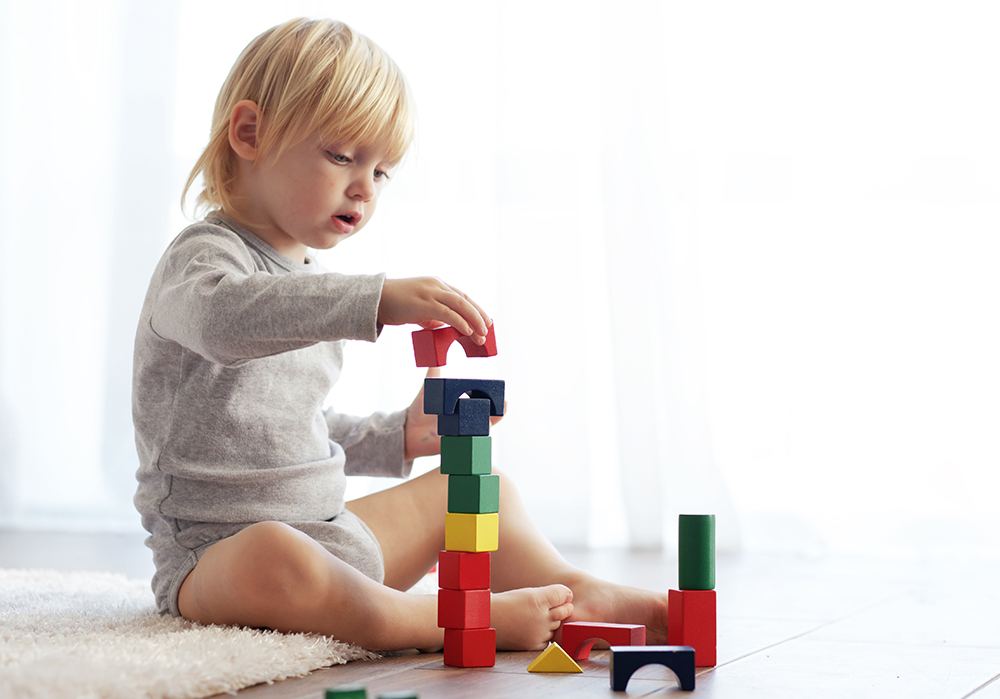
Their hands are busy too: most 2-year-olds build a tower of 4 to 6 blocks, turn book pages one at a time, and use a spoon. Their legs are just as active — they run, jump with both feet, and kick a ball. These are the milestones the CDC lists in its Learn the Signs. Act Early. 2-year checklist — it is worth a quick look before you plan activities, because it shows what is typical at this age and what comes next. If you want activities matched to those hand skills, our fine motor activities for 2 year olds guide builds on the same milestones.
Every child develops at their own pace, and a milestone list is a guide, not a test. If your toddler does some of these things and not others, that is normal. If you are worried about anything, talk to your pediatrician — they can tell you in minutes what a web page cannot.
What 2 year olds are learning right now
At two, your toddler is in the middle of a big leap: first two-word sentences, pretend play, sorting by color and size, and a growing need to do things "by myself." The best activities at this age are short, hands-on and repeatable. A 2 year old does not need a finished craft — they need to pour, dump, stack, squish and try again.
Keep sessions to 10–15 minutes. If they wander off, that is normal. Put the activity away and try again tomorrow — repetition is how toddlers learn.
15 activities for 2 year olds
1. Pom-pom scoop and sort
You need: a muffin tin, large pom-poms, a big spoon or tongs. How: put the pom-poms in a bowl and let your toddler scoop them into the muffin cups, one per cup. Name the colors as they go: "red pom-pom, blue pom-pom." Skills: hand-eye coordination, color words, patience. Time: 10 minutes. Mess: Low.
2. Tape road on the floor
You need: painter's tape, toy cars. How: stick tape on the floor in roads, curves and a parking square. Your toddler drives cars along the lines and parks them in the square. Skills: following a path, spatial words (in, out, around), quiet focus. Time: 10–15 minutes. Mess: Low.
3. Water pouring station
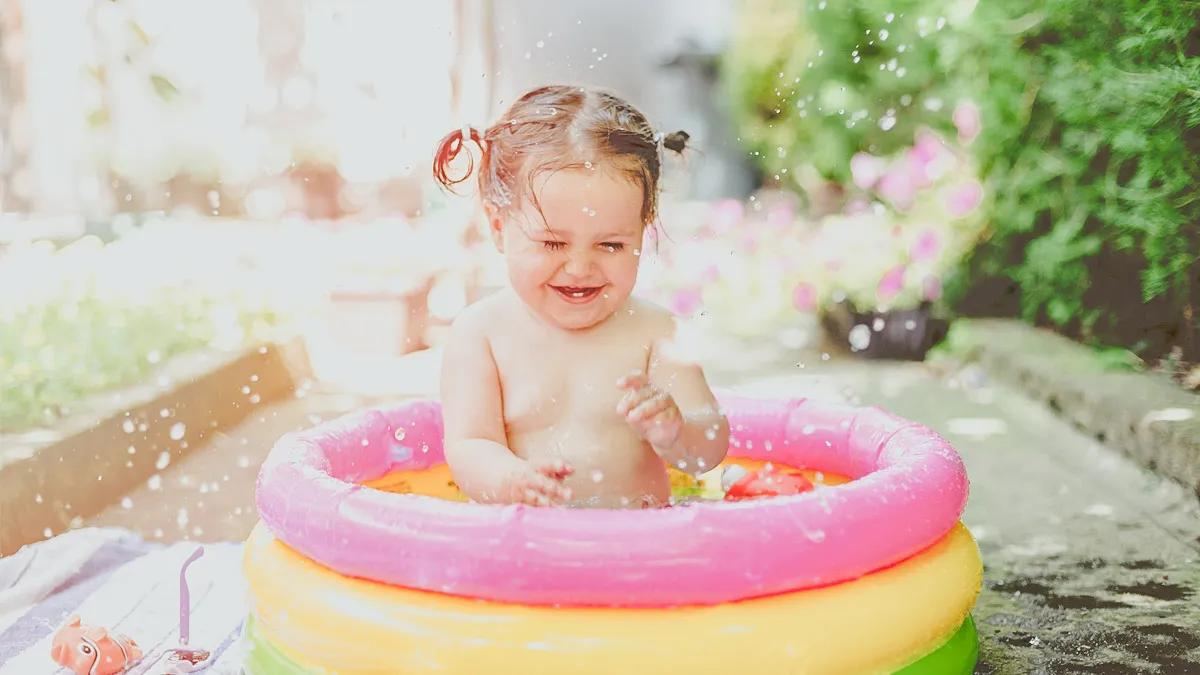
You need: a shallow bin, cups and jugs of different sizes, a towel underneath. How: fill the bin with a few inches of water and let them pour from one cup to another. Add a few plastic animals to "wash." Skills: pouring control, full and empty, cause and effect. Always stay within arm's reach around water. Time: 10–15 minutes. Mess: Medium (water).
4. Sticker line tracing
You need: big dot stickers, a sheet of paper with a wavy line drawn on it. How: your toddler sticks dots along the line. Peeling stickers is a serious finger workout at this age — for more ideas like this, see our fine motor activities guide. Skills: pincer grip, following a line, concentration. Time: 5–10 minutes. Mess: Low.
5. Cardboard box kitchen
You need: a large cardboard box, play dishes or safe kitchen tools. How: the box becomes a stove, a shop or a house. Your toddler "cooks" and serves you dinner. Skills: pretend play, new words, turn-taking. Time: 15 minutes. Mess: Low.
6. Color scavenger hunt
You need: nothing. How: pick a color — "Can you find something red?" — and walk around the room together finding it. Then switch colors. Skills: color names, observation, movement. Time: 10 minutes. Mess: None.
7. Bubble chase and pop
You need: bubble solution and a wand. How: blow bubbles and let your toddler chase and pop them. Count the pops out loud. Skills: gross motor skills, counting, joy. Best outdoors or in a room with a washable floor. Time: 10 minutes. Mess: Low.
8. Sensory rice dig
You need: a bin of dry rice, small cups, spoons and a few hidden toys. How: bury the toys and let your toddler dig them out with cups and hands. For more bin ideas, see our sensory bins guide. Skills: sensory exploration, digging and scooping, focus. Supervise closely — rice is a choking hazard if it goes in the mouth. Time: 10–15 minutes. Mess: Medium (rice).
9. Music and freeze dance
You need: music. How: dance together, then pause the music and freeze. Start again. Add animal moves: stomp like an elephant, hop like a frog. For more songs and movement games, see our music and movement activities. Skills: listening, body control, rhythm. Time: 10 minutes. Mess: None.
10. Book basket
You need: 4–5 board books in a basket. How: let your toddler choose a book, point at the pictures and name what you see. Ask "Where is the dog?" and wait for them to point. Skills: vocabulary, pointing, early reading habits. Time: 10 minutes. Mess: None.

11. Indoor scavenger hunt
You need: nothing — or picture cards if you want a head start. How: give your toddler one simple thing to find at a time: "Find something round." "Find something soft." "Find something you can wear." Walk around the house together and cheer every find. Keep the list short — three or four items is a full game at this age. Skills: observation, describing words, problem-solving. Time: 10 minutes. Mess: None.
12. Pillow mountain and animal walks
You need: pillows and cushions, a clear patch of floor. How: pile the pillows into a mountain and let your toddler climb over it, then crawl under a blanket draped across two chairs. Then try animal walks across the room: bear crawl on hands and feet, frog hops, penguin waddles with arms at your sides. Skills: gross motor skills, balance, imagination. Time: 10–15 minutes. Mess: Low (pillows everywhere).
13. Tea party for teddies
You need: toy cups and a small teapot or jug, stuffed animals, a tray. How: set the table with a cup for each teddy, pour pretend tea, and serve a snack of crackers. Ask your toddler, "Does Bear want sugar?" and let them answer for the teddies. Take turns being the host and the guest. Skills: pretend play, manners words, turn-taking. Time: 10–15 minutes. Mess: Low.
14. Puzzle relay
You need: two chunky puzzles with big pieces. How: put the puzzle boards at one end of the room and the pieces in a pile at the other end. Your toddler walks — or runs — to fetch one piece at a time and fit it into the board. Race them, or just cheer each piece home. Skills: gross motor skills, matching, memory. Time: 10 minutes. Mess: Low.
15. Sock matching
You need: 4–5 pairs of clean socks, a laundry basket. How: mix all the socks into a pile and let your toddler find the matching pairs. Roll each pair into a ball and toss it into the basket. Start with socks that look very different — stripes, spots, plain — so matching is easy. Skills: matching, sorting, fine motor skills. Time: 5–10 minutes. Mess: Low.
Language and pretend play
At two, pretend play is language practice. When your toddler stirs an empty pot or feeds a teddy, they are trying out the words they hear every day: "stir," "hot," "more," "all done." The best thing you can do is join in without taking over. Narrate what they do — "You poured the tea for Bear!" — and ask one simple question at a time: "What are you cooking?" Then wait. Toddlers need a few seconds to find the words, and the pause is part of the learning.
Songs help too: action songs and movement games build the same listening and word skills — our music and movement activities are a good place to start. And read together every day, even for five minutes. A child who hears "Where is the dog?" and points at the picture is practicing the same skill they will use to answer a real question.
Tips for doing activities with a 2 year old
- Set up in 2 minutes or less. If setup takes longer than the activity, simplify it.
- Follow their lead. If they want to pour the rice instead of digging for toys, that is still learning.
- Use the same activity for a week. Toddlers love repetition — the second and third time they do it, they learn more.
- Keep a "busy box" ready. A box with pom-poms, cups, tape and stickers means you can start an activity before the boredom meltdown.
What to do when they lose interest in 3 minutes
That is normal at two. As a rough rule of thumb, toddlers focus for about 2–4 minutes per year of age on an adult-led activity, so 4–8 minutes is a full session at two. Offer two choices ("water play or stickers?"), keep the activity visible on a low shelf so they can return to it, and do not force it. The goal is a happy toddler who played, not a finished project.
Frequently asked questions
How many activities does a 2-year-old need each day?
Two or three short sessions of 10 to 15 minutes is plenty. The rest of the day fills itself: meals, dressing, a walk outside, and free play with a few toys. Toddlers learn from repetition, so doing the same activity three days in a row teaches more than three different activities in one day.
My 2-year-old loses interest after 3 minutes. Is that normal?
Yes. As a rough rule of thumb, toddlers focus for about 2 to 4 minutes per year of age on an adult-led activity, so 4 to 8 minutes is a full session at two. If they wander off, let them — put the activity on a low shelf and try again tomorrow. Forcing it only makes them resist it next time.
What are the best activities for a 2-year-old at home?
Pouring water, peeling stickers, stacking blocks, pretend play with a cardboard box, and simple sorting games like pom-poms into a muffin tin. The best activities use things you already have, take under 2 minutes to set up, and you can repeat them all week. Start with the 15 ideas above and keep the ones your toddler asks for again.
Should a 2-year-old only do screen-free activities?
Hands-on play should come first at this age — it builds the hand skills, words, and focus that screens cannot. That does not mean a short video call with a grandparent is a problem. The simple rule: when you have a choice between a screen and a water bin, a sticker sheet, or a cardboard box, pick the real thing.
How do I help my 2-year-old learn new words?
Talk through play. Name what your toddler is doing — "You poured the water! The cup is full!" — and ask one simple question at a time, then wait for an answer. Read together every day, point at pictures, and name what you see. Most 2-year-olds say about 50 words; new words come from hearing them in real moments, not from flashcards.